Silver DCA Blog
What Is Dollar Cost Averaging in Silver? A Beginner's Guide
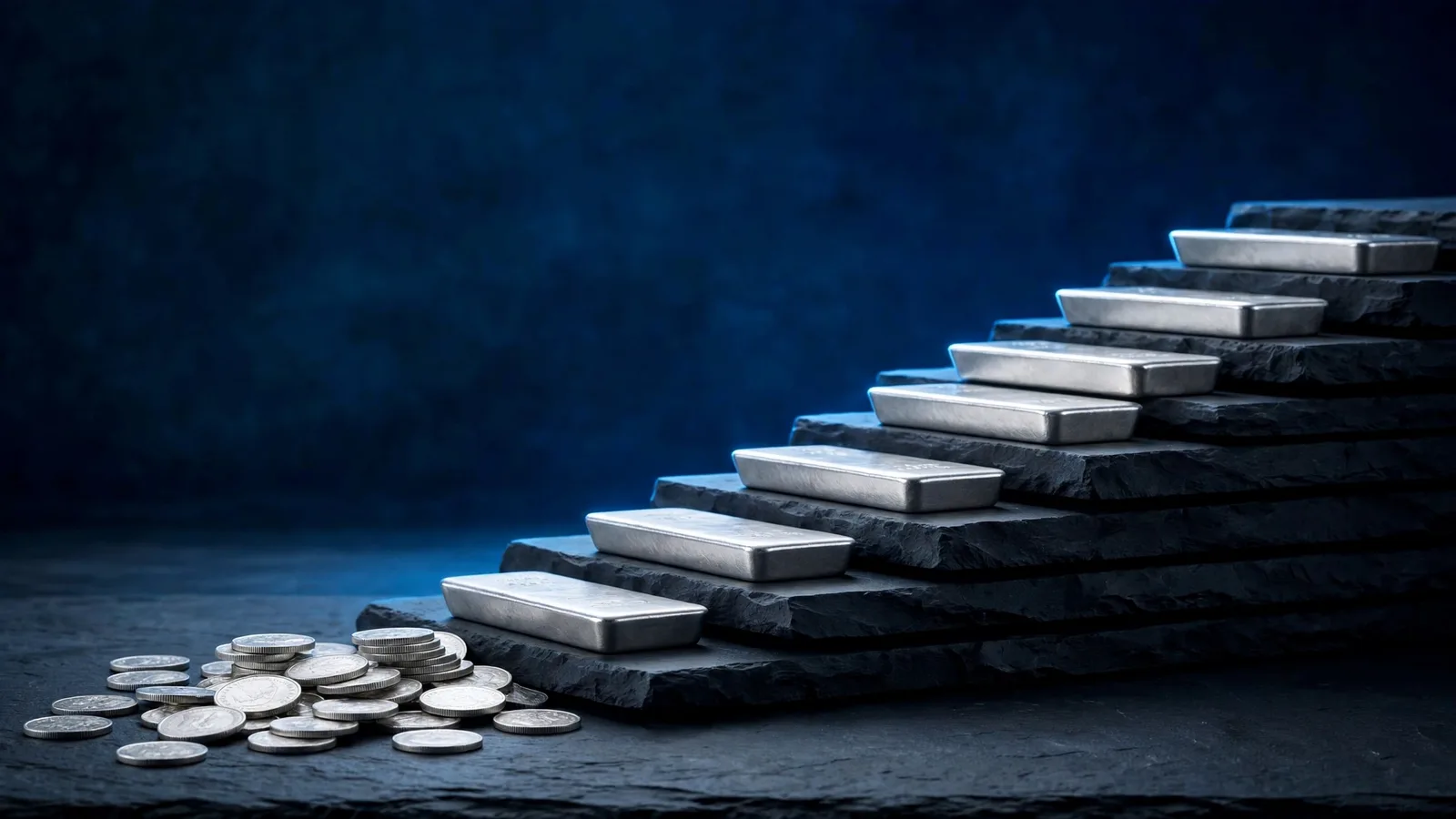
Dollar cost averaging (DCA) means buying a fixed dollar amount of silver on a regular schedule, say $100 on the first of every month, no matter what the price is doing. When the price is low, your $100 buys more ounces. When the price is high, it buys fewer. Over time your purchases blend into a single average cost per ounce, and you never have to guess the perfect day to buy.
Why stackers use it
Silver's price swings hard in both directions, which makes one big purchase a gamble on timing: buy everything today and the price drops next week, and you are underwater on the whole stack at once. Splitting the same money into regular smaller buys spreads that risk across many prices. Just as important, a routine is easier to keep than a strategy that depends on watching charts and making a fresh decision every month. You pick an amount and a day, and the habit runs itself.
Worked example
Say you buy $100 of silver on the first of the month, three months in a row. The prices below are the all in price per ounce you actually paid, including the dealer premium, because that is the number your average has to use:
- Month 1: $100 at $32 per ounce buys 3.125 ounces
- Month 2: $100 at $28 per ounce buys 3.571 ounces
- Month 3: $100 at $36 per ounce buys 2.778 ounces
Add it up: you spent $300 and hold 9.474 ounces. Your blended average cost is $300 ÷ 9.474 ounces = about $31.67 per ounce.
Notice two things. First, your average ($31.67) is lower than the simple average of the three prices ($32), because your fixed $100 automatically bought more ounces in the cheap month. Second, compare the alternative: putting the whole $300 in during month 3 at $36 would have bought only 8.333 ounces. This time DCA came out ahead. In a market that rises every month, the lump sum would win instead, DCA does not beat a rising market, and any honest guide should say so. What it reliably does is remove the timing gamble and keep you buying through dips you would otherwise sit out.
Run your own numbers
The calculator on the homepage does this maths in seconds. Enter the ounces you already hold and your average cost so far, then add a planned purchase, the ounces and the all in price per ounce, and it returns your new blended average, your updated total, and your profit or loss at the live spot price. Try it with your last three purchases and compare the result with what your dealer receipts say.
Mistakes to avoid
- Using the spot price instead of what you paid. Your average cost must be built from all in prices, premium included, or it will flatter you and mislead every decision after it.
- Skipping months when the price rises. Pausing whenever silver feels expensive quietly turns DCA back into market timing. The routine is the point.
- Changing the amount on emotion. Doubling up after a dip story or halving after a scary headline is timing again. Set the amount from your budget, review it a few times a year, and leave it alone in between.
Variations to try
- Payday schedule: buy on each payday instead of monthly. Same maths, easier budgeting, and the smaller buys add up to the same routine.
- Fixed ounces instead of fixed dollars: buy one ounce per month regardless of price. Simpler to picture, but your spending swings with the price, the fixed dollar version is the one that buys more when silver is cheap.
- DCA plus a dip fund: keep most of your budget on the regular routine and hold a small reserve for unusually deep dips. The routine keeps you honest; the reserve scratches the bargain hunting itch without taking over.
Want your own average worked out? The free Silver DCA Calculator on the homepage blends your purchases into one average cost per ounce and tracks your profit and loss at the live spot price, your portfolio stays in your own browser, nothing is uploaded.
Open the calculatorRelated posts
- All Silver DCA blog posts, new guides every Tuesday and Friday, starting with how to calculate your silver average cost step by step.
This post is general information about how dollar cost averaging maths works. It is not financial advice and does not recommend any purchase. Silver prices move both ways, do your own research before buying.