Silver DCA Blog
What Is a Troy Ounce? (And Why Your Silver Is Not Weighed in Regular Ounces)
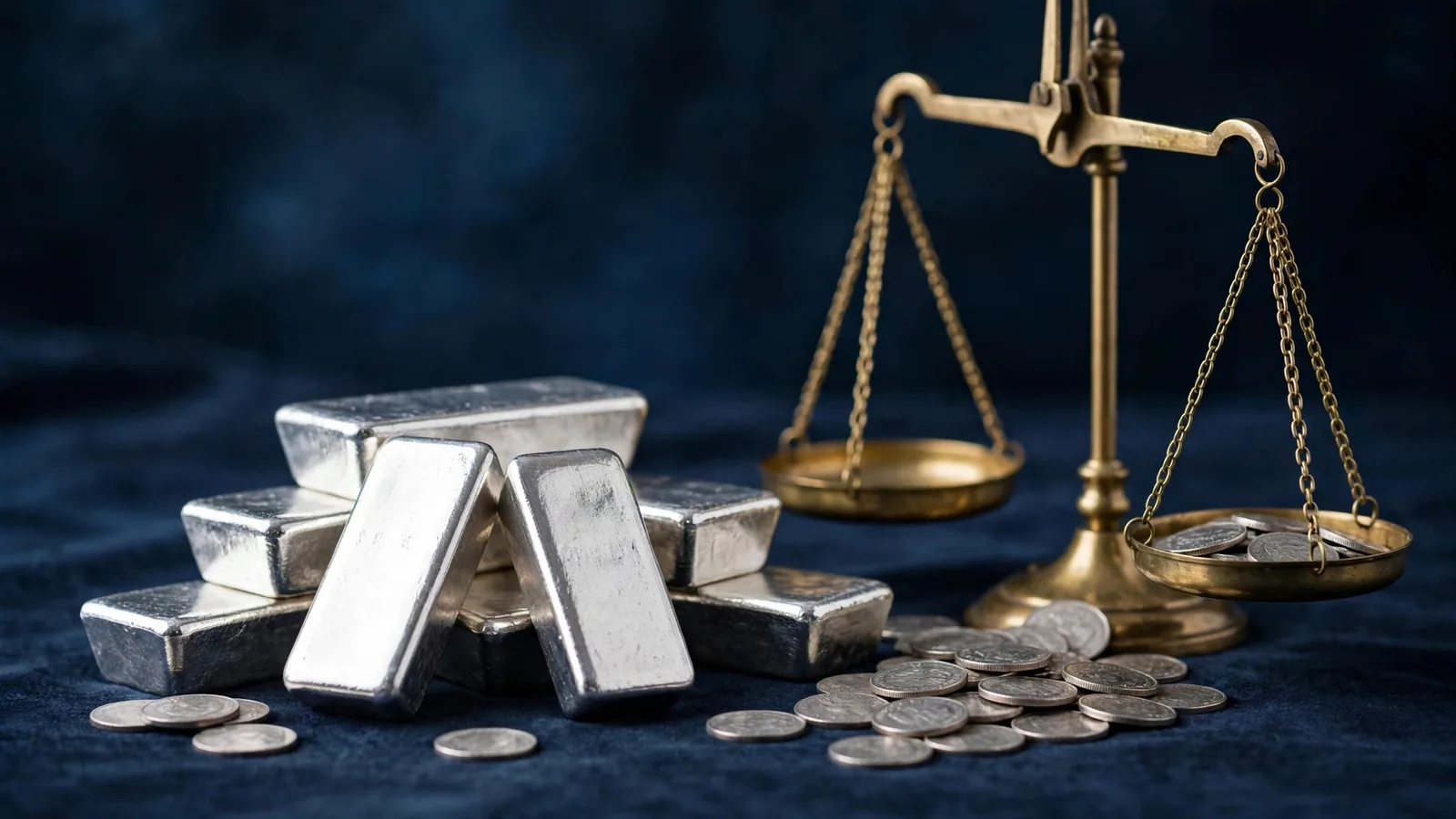
A troy ounce is the unit that every silver price, coin, bar, and premium is built on, and it is not the same as the regular ounce you use in the kitchen. One troy ounce weighs 31.1035 grams, while one regular ounce weighs 28.35 grams, so a troy ounce is about 9.7 percent heavier. Silver has been weighed in troy ounces for centuries, and the spot price you see quoted is always a price per troy ounce.
Worked example
Say you buy a bar stamped 10 troy ounces and you pay $390.00 in total, all in. Here is what that bar really weighs, and what happens to your average cost if you convert its weight with the wrong ounce:
- Step 1, Work out the weight in grams. 10 troy ounces × 31.1035 grams = 311.035 grams. That gram weight is exact, no matter which ounce you prefer.
- Step 2, Work out your average cost the right way. $390.00 ÷ 10 troy ounces = $39.00 per troy ounce. That is your true average cost for this bar.
- Step 3, See the wrong conversion. If you take those same 311.035 grams and divide by the regular ounce instead, 311.035 ÷ 28.35 = 10.97 regular ounces. The bar did not gain any silver. The number grew only because the regular ounce is smaller.
- Step 4, See what the mix up does to your average. If you then treat that 10.97 figure as troy ounces, you get $390.00 ÷ 10.97 = $35.55 per ounce. Your records would say your silver cost you $35.55 an ounce when it really cost you $39.00, an understatement of $3.45 on every ounce, and every profit and loss figure you build on that average will be flattered from that point on.
The lesson is simple. Do your silver maths in troy ounces from start to finish, and convert to grams only when you need a gram weight, for example when you check a piece on a kitchen scale that reads in grams.
Run your own numbers
The free Silver DCA Calculator on the homepage works in troy ounces throughout, the same unit your dealer used when you bought. Add each purchase with the number of troy ounces stamped on the piece and the all in price per troy ounce you actually paid, and the calculator blends your purchases into one average cost per troy ounce and compares it with the live spot price, which is also quoted per troy ounce. Because both sides of the comparison use the same unit, the profit and loss it shows is the real figure, not one skewed by a unit mix up. Your portfolio stays in your own browser; nothing is uploaded.
Mistakes to avoid
- Reading a stamp of 1 oz as a regular ounce. On a coin, a round, or a bar, the oz in the stamp means troy ounces, always. A coin stamped 1 oz contains 31.1035 grams of silver, not 28.35 grams, so it should feel a little heavier than a regular ounce of anything else.
- Converting grams with the wrong ounce. To turn a gram weight into troy ounces, divide by 31.1035. To turn it into regular ounces, divide by 28.35. Using the wrong divisor inflates your ounce count by about 9.7 percent, as the worked example shows, and quietly corrupts every average built on it.
- Mixing units inside one stack record. Keep every purchase in troy ounces in your records. If a listing gives a weight in grams, convert it to troy ounces once, at the point where you record it, and note the stamped troy weight on the piece itself wherever one exists.
Variations to try
- Checking a coin on a kitchen scale. A coin stamped 1 troy ounce should read about 31.1 grams on a scale set to grams, a little more once any capsule or packaging is counted. A reading near 28 grams would be a warning sign worth a second look, not a rounding difference.
- Working with larger bars. The same maths scales up. A bar stamped 100 troy ounces weighs 100 × 31.1035 = 3,110.35 grams, or about 3.11 kilograms. Dealers quote these bars per troy ounce as well, so your average cost maths stays in the one unit.
- Reading fractional pieces. Some coins and bars are sold as a half, a quarter, or a tenth of a troy ounce. The stamp still means troy weight, so a half troy ounce piece holds about 15.55 grams of silver, and it enters your records as 0.5 troy ounces.
Want your own average worked out? The free Silver DCA Calculator on the homepage blends your purchases into one average cost per ounce and tracks your profit and loss at the live spot price, your portfolio stays in your own browser, nothing is uploaded.
Open the calculatorRelated posts
- How to Calculate Your Silver Average Cost, Step by Step
- Silver Spot Price vs the Price You Actually Pay: Premiums Explained
This post is general information about how dollar cost averaging maths works. It is not financial advice and does not recommend any purchase. Silver prices move both ways, do your own research before buying.